POD 01
OPERATIONALDual-RTX 5090 compute pod
2installed GPUs
Multi-GPU capacity or two parallel 32 GB workers.
- FP32
- 209.6 TFLOPS
- AI
- 6,704 TOPS
- VRAM
- 2 × 32 GB
- CUDA
- 43,520 cores
- GPU TGP
- 1,150 W
Installed accelerator fleet
A transparent view of the physical GPU systems operating inside our distributed neocloud. The current fleet combines three dual-GPU pods under one managed operating layer.
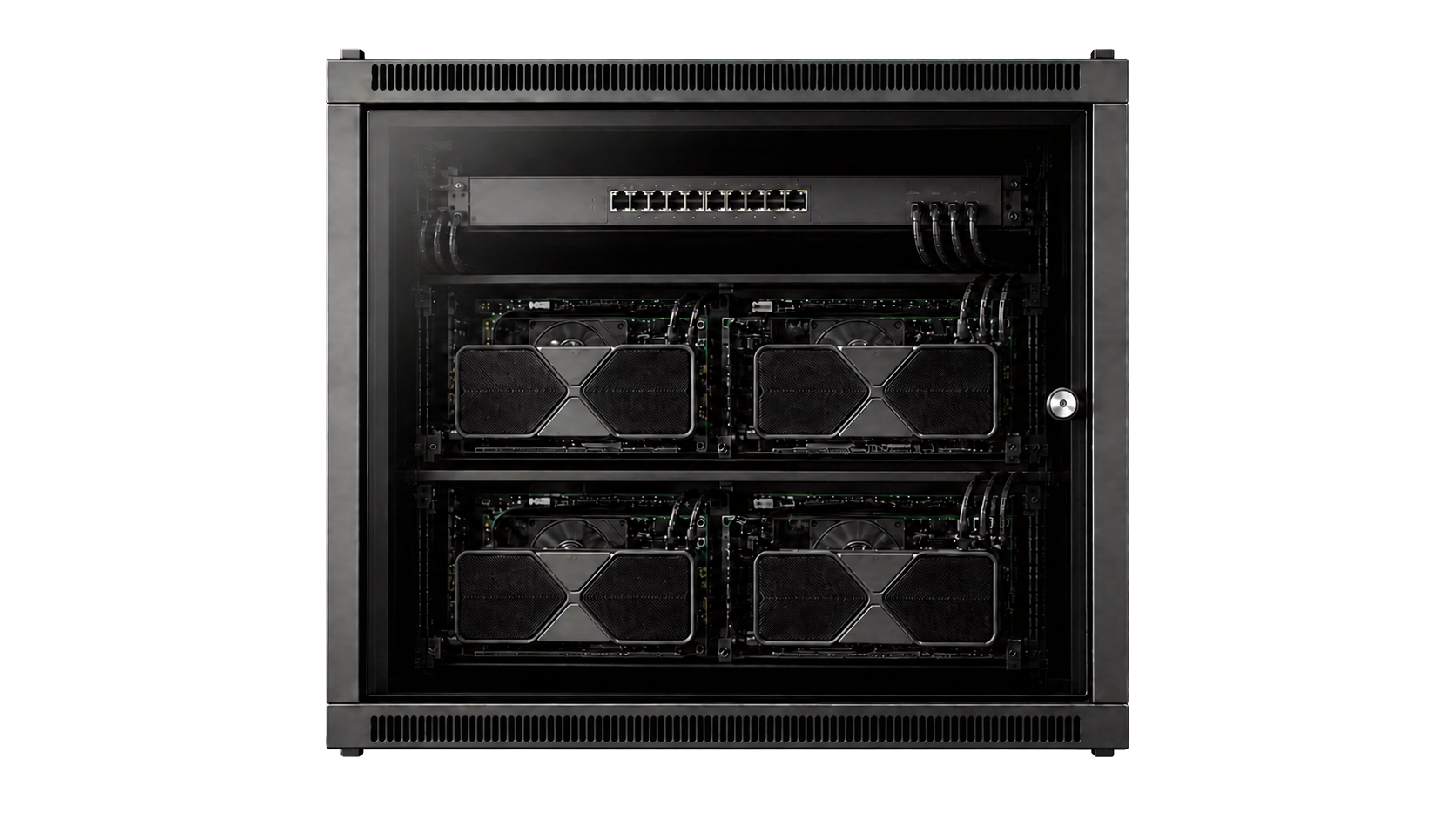
01 / Operational systems
Each dual-GPU pod is independently serviceable and can be allocated according to workload fit. GPU memory remains local to each GPU and is not represented as one unified pool.
Multi-GPU capacity or two parallel 32 GB workers.
Multi-GPU capacity or two parallel 32 GB workers.
Multi-GPU capacity or two parallel 32 GB workers.
02 / Capacity profile
Each chart uses the six-GPU fleet total as its full scale. Every pod contributes two RTX 5090 GPUs, or one-third of the installed network capacity.
FP32 TFLOPS estimate peak non-Tensor shader throughput. AI TOPS are NVIDIA's published theoretical AI figure and use a different operation and precision basis; the two values are not additive. Figures are installed-hardware maxima, not guaranteed workload performance, utilization, uptime, or immediately available rental capacity. Actual results depend on software, precision, thermals, power, and workload design.
Review NVIDIA RTX 5090 specifications ↗ACCESS THE NETWORK
Tell us your workload, GPU count, software stack, utilization pattern, storage needs, and preferred start date.